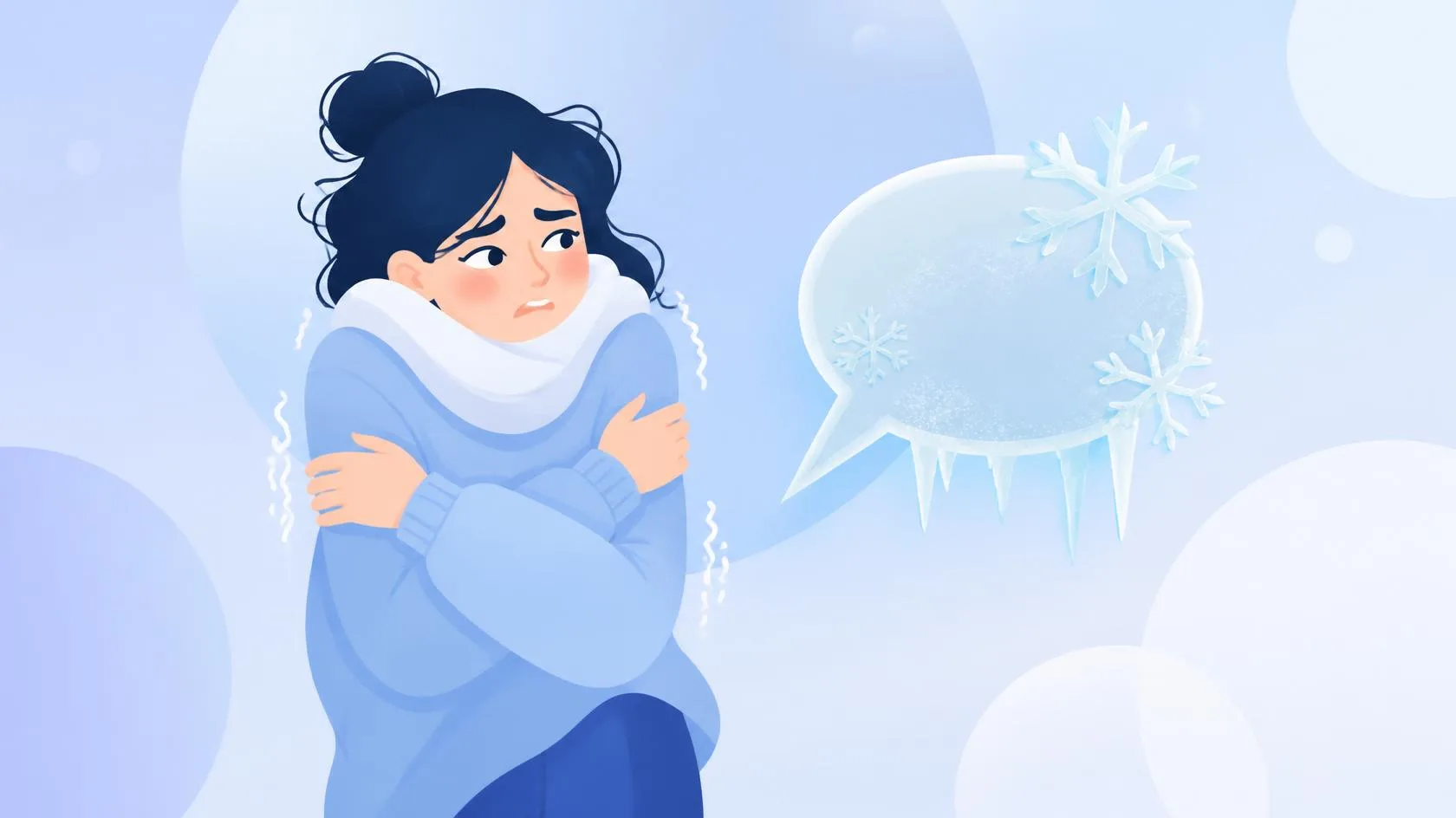
What Is Cold Texting? (Meaning)
Cold texting meaning, in simple terms: it's when someone's messages feel emotionally distant, short, or detached — technically polite but lacking warmth. The cold text meaning isn't about the literal words but the tone underneath them. A reply like "ok" or "sure" isn't rude on paper, yet it reads as cold because it withholds the warmth you'd normally expect. Understanding what cold texting is helps you tell the difference between someone who's genuinely upset and someone who's simply busy or tired.
What Does a Cold Reply Mean?
A cold reply is a response that feels emotionally flat — short, distant, or oddly formal when you expected warmth. The cold reply meaning comes down to what's missing rather than what's said: no follow-up question, no emoji, no sign the person is emotionally present. "Ok." "Sure." "Fine." Each is technically an answer, yet each reads as a cold reply because it closes the conversation instead of continuing it. When people search for the cold replies meaning, they're usually trying to work out whether a dry response signals genuine distance or just a busy moment — and, as with cold texting, the answer lives in the pattern, not the single message.
People also search for "cold reply meaning" or "cold replies meaning" — these are the same thing seen from the receiving end: one-word answers, no questions back, delayed responses with no explanation. Cold in chat doesn't always mean anger. Below we break down what cold texting usually signals and how to respond without overreacting.
Cold texting has a specific texture. You can feel it even when nothing explicitly cold was said. Short messages. Minimal warmth. Answers that fulfill the obligation to respond without actually engaging. The words are polite, but the energy is gone.
It is one of the most uncomfortable texting dynamics because it is ambiguous. You know something is off, but you cannot point to a single rude sentence. The coldness is not in what they said — it is in what they did not say. The missing exclamation point. The absent emoji. The reply that ends the conversation instead of continuing it.
Here is what cold texting actually signals, why people do it, and how to respond without making things worse.
What Cold Texting Looks Like
Cold texting is not always obvious. It is a pattern, not a single message. Here are the hallmarks:
Short, minimal responses. "Yeah." "Ok." "Sure." Technically answers, but no elaboration, no follow-up, no energy.
No questions. They respond to what you say, but they never ask anything in return. The conversation only continues because you keep driving it.
Delayed responses with no acknowledgment. They take hours to reply and offer no apology or explanation. The delay itself is part of the coldness — it signals you are not a priority.
Warmth markers disappear. They used to use your nickname, add emojis, sign off warmly. Now it is flat and neutral. The absence of those small gestures is glaring.
Formal or stiff language. If someone shifts from casual to formal — from "yeah" to "yes," from "totally" to "certainly" — they are creating distance on purpose.
The key is not any one of these in isolation. It is the pattern. And especially, it is the change. If someone used to text warmly and now texts coldly, that shift is the signal.
What Cold Texting Signals
Cold texting is usually one of four things:
1. Emotional withdrawal — they are upset or hurt.
Something happened. Maybe you said something that landed wrong. Maybe they feel neglected or dismissed. Maybe they are hurt and do not know how to say it directly. So they pull back. The coldness is protective. It says: "I am here, but I am not okay, and I am not going to pretend I am."
This is one of the most common causes of cold texting. It is not always rational, and it is not always fair. But it is real. And if you care about the relationship, you have to meet them where they are, even if the withdrawal feels unfair.
2. Distraction or stress — it has nothing to do with you.
They are overwhelmed. Work is crushing them. Family drama is consuming their energy. They are depressed, anxious, or just running on empty. They do not have the bandwidth to be warm right now, with anyone. The coldness is not personal — it is depletion.
The way to tell? Check if they are doing this across the board. If they are cold with everyone, it is probably not about you. If they are cold only with you, it is personal.
3. Relationship reassessment — they are reconsidering the dynamic.
Maybe the relationship moved too fast and they need space. Maybe they realized they are not as interested as they thought. Maybe they are unsure how they feel and they are pulling back while they figure it out. The coldness is distance, and the distance is intentional.
This is hard to accept because it is passive. They are not saying "I need space" or "I am not sure about this." They are just… pulling away. And you are left guessing. But the coldness is not ambiguous. It is a signal. The question is whether you are going to name it or let it linger.
4. It is just their baseline communication style.
Some people are naturally terse texters. They do not use emojis. They do not elaborate. They answer questions and move on. It is not coldness — it is efficiency. And if this is how they have always texted, it does not mean anything emotional. It is just how they communicate.
The key is distinguishing between a change from their normal pattern and their consistent baseline. If they have always texted this way, it is not cold — it is neutral. But if this is new, it is a shift. And shifts mean something.

Check how your message sounds
Paste any message or email and see whether it reads as warm, cold, rude or passive-aggressive before you send it.
Try Check Message →How to Respond
Your instinct might be to match the coldness — to pull back in self-protection, to stop initiating, to wait for them to come to you. That is understandable. But it usually backfires. It creates a spiral of mutual withdrawal where both people are waiting for the other to warm up first, and no one does.
Here is what to do instead:
Do not match the coldness.
Mirroring coldness does not solve the problem. It intensifies it. If they are cold because they are upset, matching their tone tells them you do not care enough to check in. If they are cold because they are stressed, matching their tone adds to their stress. Either way, it makes things worse.
Stay warm, but do not overcompensate. Do not flood them with affection or enthusiastic texts trying to break through the ice. Just be consistent. Show them the dynamic has not changed on your end, even if it has on theirs.
Do not over-pursue warmth.
Sending increasingly warm, enthusiastic, or affectionate messages when someone is being cold usually backfires. It can feel desperate, and it puts pressure on them to reciprocate energy they do not have right now. It also makes you vulnerable to feeling rejected when they do not match your warmth.
Stay steady. Do not chase. Do not beg for engagement. Just be present without demanding they meet you there.
Name the pattern calmly.
The healthiest response is usually to name what you are noticing, without accusation or pressure:
"Hey, your messages have felt a little different lately. Everything okay with us?"
This is direct without being confrontational. It shows you are paying attention. It gives them an opening to explain what is going on. And it puts the issue on the table in a way that is hard to deflect with another "I'm fine."
If they still say nothing is wrong, you have done your part. You opened the door. If they do not walk through it, that is their choice. But at least you know you tried.
Give it space.
If they are withdrawing because they are upset, they might need time before they can talk about it. Pushing too hard can make them retreat further. Sometimes the best thing you can do is name the issue, offer to talk when they are ready, and then step back.
"I feel like something is off, and I am here whenever you want to talk about it. No pressure."
This respects their process while making it clear you are not going to ignore the tension. It keeps the door open without forcing them through it.
Move to a richer medium.
If the coldness feels significant and sustained, text is not the right medium to resolve it. Suggest a call or an in-person conversation. Tone and intent are easier to misread in text, and harder conversations need more bandwidth than text provides.
"I think we should talk about this — would you be up for a call later?"
If they say no or deflect, that tells you something too. It means they are not ready, or they do not see the issue the way you do. Either way, you have clarity.
What Not to Do
Do not ignore it. Pretending everything is fine when it is clearly not just lets resentment build. Address the dynamic before it hardens into something permanent.
Do not demand an explanation. "Why are you being cold?" or "What did I do?" puts them on the defensive. It makes the conversation about your need for reassurance rather than about solving the issue together.
Do not assume the worst. Cold texting does not always mean they are done with you or angry at you. Sometimes it just means they are going through something. Give them the benefit of the doubt before you catastrophize.
Do not make it about you. If they are stressed or overwhelmed, your reaction should not be "Why are you being cold to me?" It should be "How can I support you?" Centering yourself when they are struggling makes the dynamic worse, not better.
When to Walk Away
If you have named the pattern, offered to talk, given them space, and the coldness continues — with no explanation, no acknowledgment, no effort to repair — you have your answer. They are choosing distance. And at that point, your job is not to chase. It is to respect their choice and decide whether you are okay with a relationship that feels this way.
Cold texting that goes unaddressed becomes the new normal. If you do not want that, you have to either repair it or let it go. You cannot wait indefinitely for someone to warm back up if they are not willing to meet you halfway.
Final Thoughts
Cold texting is one of the most uncomfortable communication patterns because it is indirect. The person is telling you something without saying it out loud, and you are left trying to decode what it means.
But here is the truth: you can feel coldness in a text even when nothing explicitly cold was said. Trust that feeling. Name it. Give them space to explain. And if they do not, decide whether you are willing to stay in a dynamic that feels this distant. You deserve warmth, consistency, and clarity. And if someone cannot give you that, it is okay to stop pursuing it.
Cold Reply Meaning in Chat: 8 Common Examples Decoded
Most people looking up the meaning of a cold reply have one specific message in front of them. Here are the replies that most often feel cold, what they usually mean, and what they rarely mean. Context and the person's normal texting style always matter more than any single word.
- "k" or "k." The most notorious cold reply. A lone letter, especially with a period, usually signals irritation or a wish to end the conversation. From someone who always texts this way, it may simply be speed.
- "ok" Neutral acknowledgement in most cases. It reads cold mainly when it answers something emotional, like an apology or exciting news.
- "fine" Rarely means fine. In reply to a question about feelings, or to a plan the person disagreed with, it often signals quiet frustration.
- "sure" Can be easygoing agreement or reluctant compliance. The difference is usually in what came before: a casual question versus a request they did not want.
- "noted" or "understood" Formal and closed. Common and efficient at work, but in a personal chat it can feel like a door being shut.
- "if you say so" Disagreement dressed up as agreement. This one leans passive-aggressive rather than merely cold.
- "haha" and nothing else Polite acknowledgement without engagement. Often it means the person is busy or the topic did not land.
- A single 👍 Generational and personal. Many people use it as a friendly "got it", while others read it as dismissive. Check how this person normally uses it.
If you are unsure how a specific reply reads, paste it into an AI tone checker. It cannot read the other person's mind, but it gives you a neutral second opinion on whether the wording itself is cold, neutral or irritated.
Cold, Dry or Hostile? Telling the Difference
These three words get mixed up constantly, but they describe different things. A dry text is low effort: short, flat, no questions back. It usually reflects tiredness, distraction or a texting habit rather than any feeling about you. A cold reply carries emotional distance. It is not just short; it feels withheld, as if warmth that would normally be there has been switched off. A hostile tone goes a step further and contains active negativity: blame, sarcasm, pointed emphasis or veiled threats.
The distinction matters because each calls for a different response. A dry text often needs nothing more than a lighter, easier question. A cold reply is worth a gentle check-in. A hostile message calls for slowing down and not answering in kind. If a message feels genuinely angry rather than just distant, an anger text detector can help you gauge how intense the frustration really is before you reply.
How to Reply to a Cold Text Without Overthinking It
The best reply to a cold text is usually short and low-pressure. Matching their coldness tends to widen the distance, while a long emotional message can feel like pressure. A few options that work in most situations:
- Keep it light: "All good, talk later!" leaves the door open without demanding anything.
- Check in once: "You seem a bit off today, everything okay?" invites an explanation without accusing.
- Move it offline: if something real seems wrong, a short call often resolves in two minutes what ten texts cannot.
- Give it time: one cold reply after a long day is rarely a verdict on your relationship. Watch the pattern over several days.
What to avoid: interrogating ("Why are you being like this?"), sending several follow-ups in a row, or treating one message as proof of a bigger problem. A cold reply is information, not a conclusion.