Why We Overthink Texts
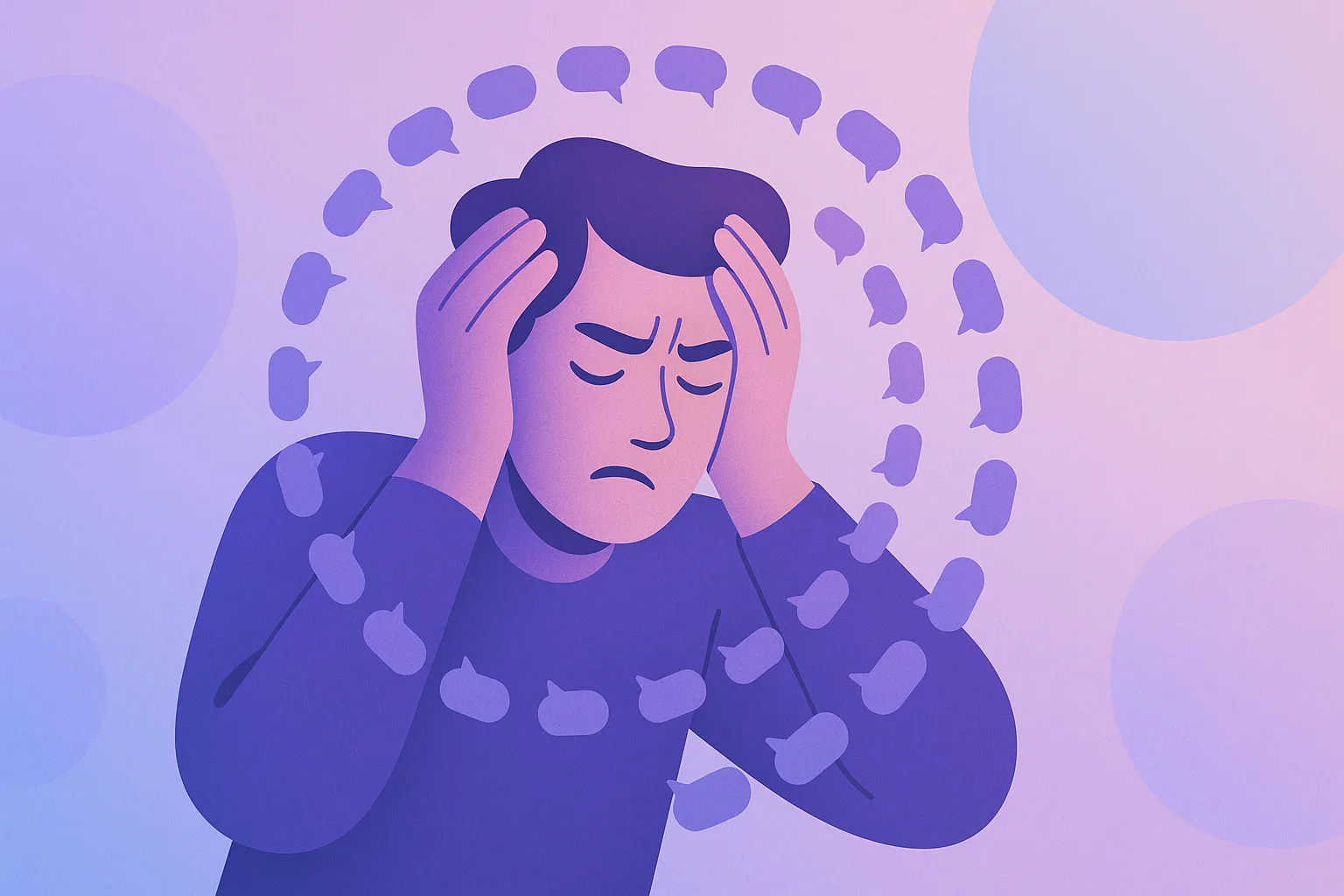
Overthinking texts isn't a personality flaw — it's a feature of how the human brain handles ambiguity. When you send a message and don't get an immediate response, your brain doesn't simply wait. It generates possibilities. Most of those possibilities are negative, because the threat-detection system in your brain is more active than the reassurance system.
Text communication makes this worse in a specific way: it gives you just enough information to fuel interpretation but not enough to resolve it. You can see they read it. You don't know what they felt. That gap is where overthinking lives.
Signs You're Overthinking Texts
Re-reading your sent message repeatedly. Looking for the thing that might have made it land wrong. Finding new problems each time you read it.
Analyzing reply timing. They usually respond in 10 minutes. It's been 25. What changed?
Draft messages you never send. You've written three follow-ups, deleted them all, written them again.
Asking others to interpret messages. "What do you think this means?" about a message that says "okay sounds good."
The mood impact. Your emotional state is significantly affected by the rhythm of a text conversation — up when it flows, down when it pauses.
The Cognitive Distortions Behind Text Overthinking
Mind reading. Assuming you know what the other person is thinking based on minimal evidence. "They're mad at me" based on a short reply.
Catastrophizing. Taking the worst possible interpretation and treating it as likely. "They haven't replied = they hate me = this friendship is over."
Personalization. Assuming their behavior is about you when it usually isn't. Most delayed replies are about the other person's life, not your message.
Emotional reasoning. "I feel like something is wrong, therefore something is wrong." Feelings are data, but they're not always accurate data.
Practical Techniques to Stop the Spiral
The 24-hour rule for interpretations. Don't draw conclusions about what a message means until 24 hours have passed. Most perceived slights and cold responses look different in a day.

Generate three alternative explanations. When your brain produces "they're ignoring me," force yourself to generate three equally plausible alternatives: they're in a meeting, their phone died, they're with someone and can't check their phone. Your brain's first explanation is rarely the only one.
Notice the pattern, not the instance. One short reply isn't data. A week of short replies is a pattern. Don't make decisions about relationships based on individual messages.
Set a send-and-move-on rule. After sending a message, consciously redirect your attention to something else for at least 30 minutes. The message is sent. Your job is done. The rest is out of your hands.
Stop checking read receipts. If read receipts are consistently triggering overthinking, turn them off — for their messages and your own. The information they provide costs more than it's worth.
When Overthinking Is Telling You Something Real
Not all text anxiety is irrational. Sometimes you're picking up on a real shift in the relationship — decreased warmth, shorter replies, reduced investment. The problem is that overthinking mixes real signals with imagined ones, making it impossible to tell the difference.
The filter: ask yourself if there's a concrete behavioral change (not just a feeling), whether it's a pattern (not just one instance), and whether you've confirmed it directly (not just inferred it). If all three are yes, the concern may be worth addressing. If not, it's probably overthinking.
The Deeper Issue: Texting as an Anxiety Amplifier
If you overthink most text conversations — not just with one person, but as a general pattern — texting itself may be functioning as an anxiety amplifier in your life. The solution isn't to text less necessarily, but to examine the underlying anxiety that text is triggering.
Are you using the responsiveness of others to regulate your sense of worth? Is a delayed reply triggering fears about abandonment or rejection that existed before this conversation? These are worth exploring — ideally with a therapist, but even as a personal reflection practice.
Check the Emotional Tone of What You're Sending
Sometimes overthinking is a response to sending a message you weren't sure about. EmoScan lets you check the emotional tone of your message before you send it — so you can move on knowing it said what you meant, in the tone you intended.
Frequently Asked Questions
How to stop overthinking texts?
Generate three alternative explanations for any silence, apply a 24-hour rule before drawing conclusions, and practice sending-and-moving-on. Most text anxiety is based on imagined interpretations, not real signals.
Why do I overthink text messages so much?
Text communication creates the perfect conditions for overthinking: enough information to interpret (they read it) but not enough to resolve (no reply yet). Your brain fills the gap with possibilities, usually negative ones.
Is it normal to overthink texts?
Extremely common — especially for people with anxiety, attachment concerns, or in relationships where the stakes feel high. The pattern is normal; it becomes a problem when it significantly affects your mood or behavior.