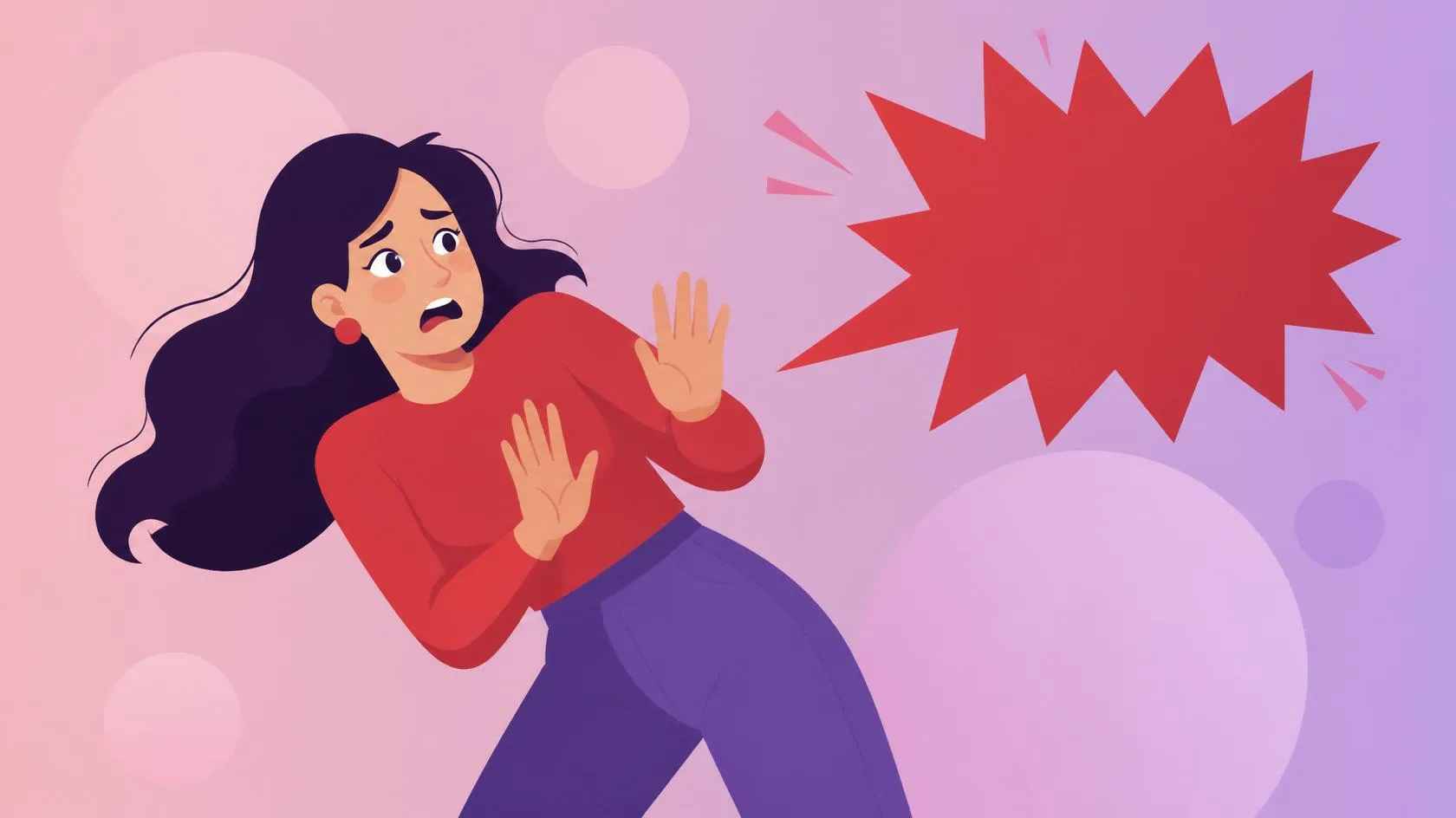
"I'm fine."
Two words. Zero punctuation. Sent three minutes after your last message.
You've been here before. You know something is wrong. But you can't prove it — because nothing they said was explicitly angry.
This is the central challenge of text communication: anger rarely announces itself. It hides in punctuation choices, response timing, word selection, and what's conspicuously absent from a message.
Learning to read these signals isn't about becoming paranoid. It's about developing the emotional literacy to respond to what someone actually feels — not just what they wrote.
The Linguistic Fingerprint of Suppressed Anger
Anger in text messages almost never looks like shouting. Shouting — ALL CAPS, explicit insults, direct accusations — is actually the easier case to handle. It's unambiguous.
The harder case is suppressed anger, which leaves a very different fingerprint:
1. Sudden extreme brevity
If someone who normally sends paragraph-length messages suddenly shifts to one-word responses, something has changed. "Ok." "Sure." "Fine." "K." These aren't neutral — they're emotional compression. The person has something to say and is choosing not to say it.
2. Missing warmth signals
Most people have habitual warmth markers: emojis they always use, certain words, exclamation points, nicknames. When these disappear suddenly, the absence is data. "Sounds good" from someone who always says "Sounds great! 😊" is a meaningful shift.
3. Unusual formality
When someone who texts casually suddenly shifts to complete sentences and formal language, they're creating distance. Emotional distance often precedes or accompanies anger. "I understand. Thank you for letting me know." from someone who normally says "got it lol" is a signal worth paying attention to.
4. The "fine" family of words
"Fine," "whatever," "sure," "as you wish," "if that's what you want" — these words nominally signal agreement but frequently carry irritation. Context matters enormously here, but when combined with other signals, they're strong indicators of suppressed anger.
5. Delayed responses after normal rapid exchanges
If you've been texting back and forth quickly and suddenly there's a 45-minute gap with no explanation, something shifted. This is especially meaningful when the delay follows a specific message — the one that landed wrong.
6. Technically correct but emotionally cold answers
"Did you eat?" "Yes." Not "Yeah, had pasta" or "Not yet, waiting for you" — just the minimum information required to answer the question. This kind of functional minimalism in someone who usually elaborates is a significant signal.

Check how your message sounds
Paste any message or email and see whether it reads as warm, cold, rude or passive-aggressive before you send it.
Try Check Message →8 Signs Someone Is Angry in a Text Message
Anger in text rarely announces itself. More often it shows up as small changes in how someone writes. Any one of these can be innocent; several together, especially from someone who usually texts differently, are worth noticing.
- Suddenly short replies. "Ok." "Fine." "Sure." where you would normally get full sentences.
- Periods where there were none. A full stop after a one-word answer often reads as clipped and cold.
- No more emojis or warmth. When the usual smileys, nicknames and exclamation marks disappear, the tone has shifted.
- "Fine" or "whatever" as a full answer. These words close a topic rather than resolve it.
- Sarcasm. "Great, thanks for letting me know" after bad news is rarely gratitude.
- Formal language with someone close. Full names, "as I said" or overly polite phrasing can signal irritation held at arm's length.
- Capitals or repeated punctuation. "I SAID tomorrow" or "???" is the text equivalent of a raised voice.
- A long silence, then a curt reply. A delay followed by a short message often means the person was cooling down, or still is.
Angry or Just Direct? Two Examples
Imagine you ask, "Can you send me the file today?" A direct but neutral reply: "Yes, will send it by 5." It is short, but complete and cooperative. An angry reply: "I already sent it. Check your email." The extra "already" and the instruction turn a simple answer into a quiet accusation. Short is not the same as angry; what matters is whether the wording carries blame, coldness or pressure.
When you are not sure which one you are looking at, the anger text detector scores how angry a message reads on a clear scale and shows the specific signals behind the score. For the broader question of whether someone is upset with you, rather than angry about one message, see our guide to signs someone is mad or upset with you over text. If the anger arrives in a work email, our guide on how to respond to an angry email professionally walks through a calm reply.
What AI Emotion Analysis Detects
Human readers catch some of these signals intuitively — but we're subject to bias. We notice what we're primed to notice. We miss patterns that span multiple messages over time.
AI emotion analysis works differently. It scans text for the distribution of emotional signals across joy, anger, sadness, fear, surprise, and disgust — and it's particularly good at detecting low-intensity, suppressed emotions that don't trigger human intuition.
When you paste a message into
EmoScan's emotion detector, it doesn't just tell you whether the text is positive or negative. It gives you a full emotional breakdown — which often reveals the anger signal that your gut was registering but your brain was dismissing.
The Danger of Misreading Anger as Neutrality
The most common mistake people make when reading text messages is confusing emotional suppression with actual neutrality.
"They said they were fine, so they must be fine."
This logic fails because text messages reward suppression. Social norms discourage explicit anger in digital communication. Most people have been conditioned to say they're fine when they're not — because saying otherwise feels vulnerable, dramatic, or confrontational.
The result: unaddressed anger that accumulates. Small unacknowledged moments of frustration compound into resentment. Resentment is much harder to repair than anger.
Recognizing the early signals — before they escalate — is the intervention that matters.
How to Respond When You Detect Hidden Anger
Once you've identified the signals, the response matters enormously.
Don't: pretend you didn't notice and continue the conversation normally. This communicates that you either can't read them or don't care enough to ask.
Don't: directly accuse them of being angry. "You're obviously upset" puts people on the defensive and often escalates the situation.
Do: name what you're observing without labeling their emotion. "Hey, I notice your messages seem shorter than usual — is everything okay?" This opens a door without forcing them through it.
Do: give them permission to feel what they feel. "You don't have to be fine if you're not." This simple sentence has diffused more suppressed anger than almost any other intervention.
Why This Skill Matters More Than Ever
We now conduct enormous amounts of our closest relationships over text. Romantic partners, best friends, family members — we communicate in writing more than in person for many relationships.
This makes emotional literacy in text communication not a nice-to-have skill but a core relationship skill. The people who thrive in close digital relationships are those who've learned to read what's not said — to hear the anger in "fine," the hurt in a single-word response, the distance in unusual formality.
AI tools can assist with this. But the goal isn't to outsource your emotional intelligence to an algorithm. It's to develop the sensitivity to notice what you might otherwise miss — and to respond in ways that build trust rather than letting suppressed anger quietly corrode your relationships.
Want to check the emotional tone of a message that feels off? Paste it into EmoScan's free emotion detector and see exactly what emotional signals are present — including the ones that are easy to miss.