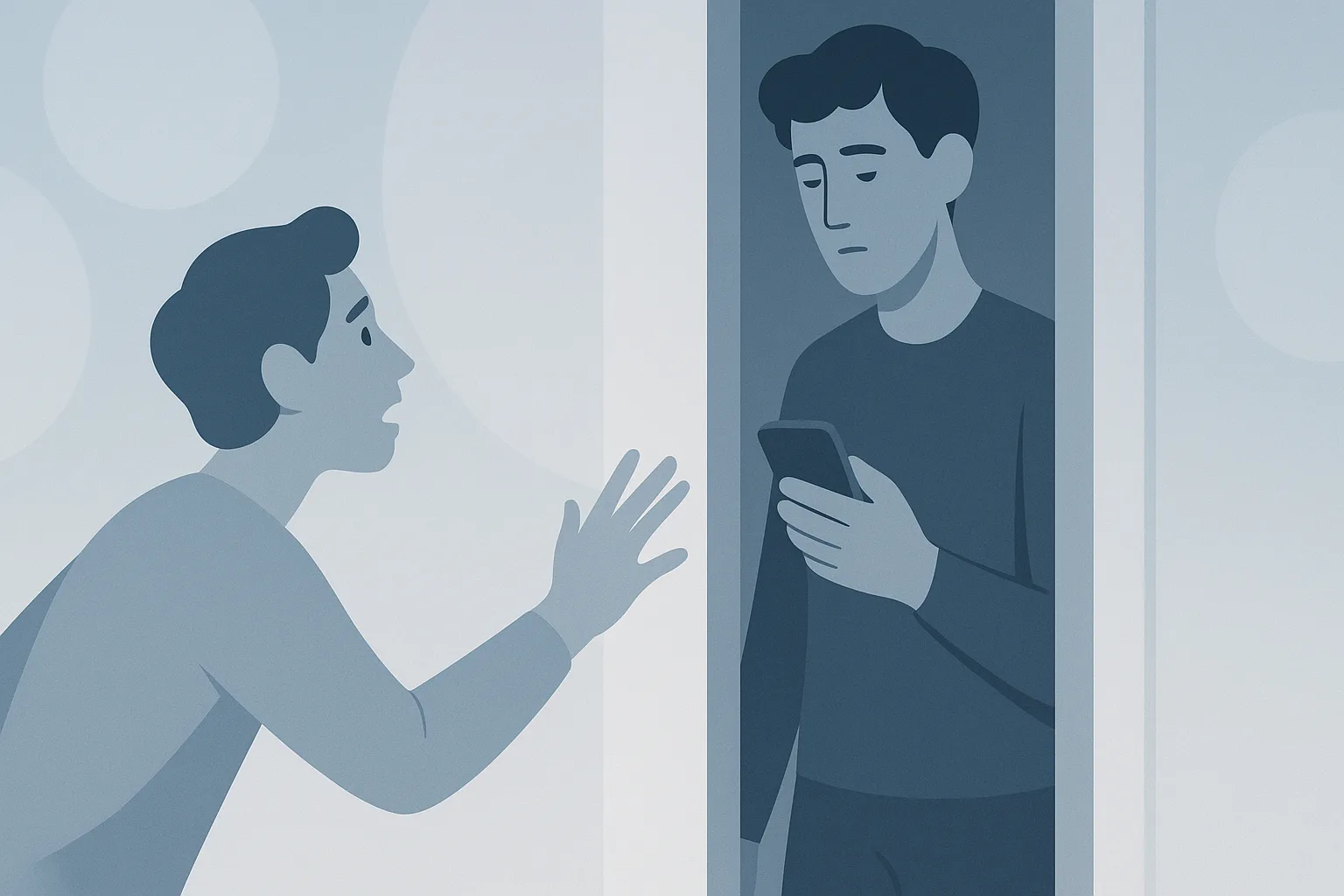
What Emotional Unavailability Looks Like in Text
Emotional unavailability is one of those patterns that's hard to name when you're inside it. The person isn't ignoring you — they reply. They're not hostile — they're pleasant. But something is missing. The connection that should be building isn't building. The conversations feel like they're happening at the surface of something that never goes deeper.
In text, emotional unavailability has specific signatures. Learning to recognize them is the first step toward understanding what you're actually dealing with.
10 Signs of Emotional Unavailability in Text
1. They respond to facts, not feelings. You share something personal. They respond with information, logistics, or a subject change. The emotional content of your message is consistently skipped over.
2. Deflection with humor. Every vulnerable moment gets a joke. Humor is genuine connection sometimes — but when it's deployed every time depth appears, it's avoidance.
3. Questions about your life go unanswered. You ask how they're doing. They answer minimally and pivot. You ask about something they mentioned. They don't follow up. The conversation flows in one direction.
4. They're responsive but not reciprocal. They reply to what you say but don't generate content of their own. The conversation only exists because you're sustaining it. If you stopped initiating, it would stop.
5. Consistent surface-level conversations. Weeks of texting and you know their schedule but not their inner life. What they did, not what they felt about it. Where they went, not why it mattered.
6. They disappear during your hard moments. When you're struggling and reach out, they either don't respond or respond with something generic. Emotional demand triggers withdrawal.
7. Future plans are consistently vague. "We should catch up sometime." "That would be fun." Nothing concrete ever materializes. Vagueness is a way of maintaining connection at a safe distance.
8. They share information but not experience. "I went to Paris last week." Not: "I went to Paris last week and it was strange because I kept thinking about..." The experience stays external.
9. Vulnerability is met with advice, not acknowledgment. You share something hard. They immediately problem-solve. The emotional weight of what you shared isn't held — it's managed.

10. You feel lonelier after talking to them than before. This is the clearest signal. Contact that leaves you feeling more alone, not less, is telling you something important about what the contact contains.
Why People Are Emotionally Unavailable Over Text
Emotional unavailability usually has a history. For some people, emotional intimacy was never safe — vulnerability led to rejection, ridicule, or abandonment. The self-protection that developed in response to that history doesn't turn off when the original threat is gone.
For others, it's situational — they're dealing with something that's consuming their emotional capacity and have nothing left for connection. This isn't the same as chronic unavailability, though it can feel identical from the outside.
And for some, text specifically is the medium where they're unavailable even if they're not in person. The distance of text allows a kind of managed persona that face-to-face interaction would crack.
What to Do About It
Name it directly, once. "I've noticed our conversations tend to stay pretty surface-level. I'd like to know you better." This gives the person an explicit invitation they can choose to accept or decline. It also gives you information: how they respond tells you what's possible.
Stop carrying the conversation. If reciprocity is consistently absent, stop compensating for it. Let the conversation find its natural level. If it stops, that's information too.
Adjust your expectations. Some people are capable of functional, pleasant, shallow connection. If that's what's available, decide whether that meets your needs — don't keep trying to convert it into something it isn't.
Reading the Emotional Pattern
EmoScan can help you see the emotional fingerprint of a conversation — the warmth, engagement, or distance beneath the surface words. If a conversation consistently reads as flat or emotionally absent, that pattern is worth paying attention to.
Frequently Asked Questions
What are signs someone is emotionally unavailable over text?
They respond to facts but skip emotional content, deflect vulnerability with humor, don't reciprocate personal sharing, and leave you feeling lonelier after contact than before.
How to deal with emotionally unavailable person over text?
Name the pattern directly once, stop over-compensating in the conversation, and adjust your expectations to what's actually available rather than what you hope is possible.